Lenticular and Fresnel screens both use directional optical structures, but they shape light differently. Your room layout and seating pattern should drive the choice.
Lenticular UST screens
Lenticular UST materials commonly use tiny horizontal optical structures that favor light arriving from the projector below while rejecting a large share of overhead light. They are popular where wide seating is important.
Fresnel UST screens
Fresnel surfaces use a more radially structured optical pattern. They can deliver higher gain and strong rejection from multiple directions, but the optical concentration can make seating position and viewing cone more important depending on the material.
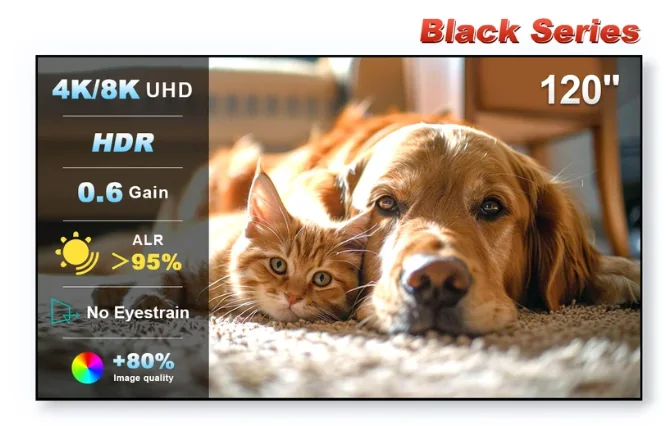
NothingProjector Black Series 120-inch ALR/CLR
Check current regional pricing, stock and merchant terms on the live offer page.
Check current price & availability →Quick comparison
| Factor | Lenticular | Fresnel |
|---|---|---|
| Common strength | Wide seating, ceiling-light control | Brightness efficiency and strong directional control |
| Viewing cone | Often wider | Often narrower / more position-sensitive |
| Room fit | Family rooms, wide sofas | Controlled seating or high ambient-light demands |
| Example | NothingProjector Black Series | Fresnel-type UST screen |
Choose for the room, not the buzzword
If your couch spans a wide angle, prioritize off-axis consistency. If you need maximum brightness retention and your seating is more centered, Fresnel may deserve a look. For a broad living-room layout, the Black Series' listed 170° viewing angle is a key part of its appeal.