For UST projection, both fixed-frame and floor-rising screens can work well. The real decision is whether you want a permanent cinema wall or a screen that disappears when the room returns to normal.
Fixed frame: simple and permanent
A fixed frame keeps the material tensioned and ready at all times. There are no motors, cases or trigger systems to manage. It is usually the cleanest choice when the wall is dedicated to the screen.
Floor rising: flexible and discreet
A motorized floor-rising screen can hide inside a cabinet or case when not in use. That flexibility is valuable in shared living spaces, but it adds mechanical complexity, cost and another large piece of furniture or hardware.
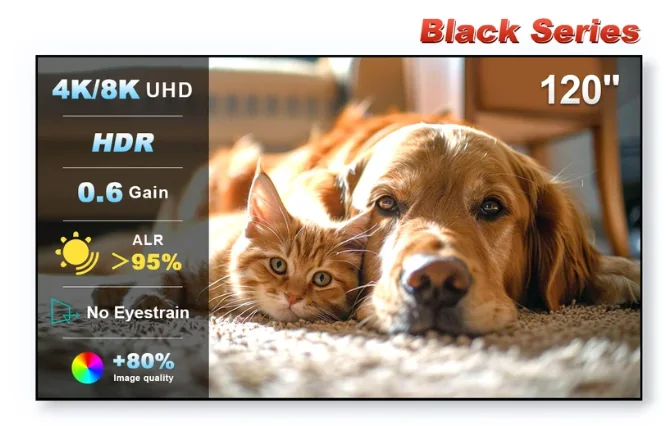
NothingProjector Black Series 120-inch ALR/CLR
Check current regional pricing, stock and merchant terms on the live offer page.
Check current price & availability →Decision table
| Priority | Fixed frame | Floor rising |
|---|---|---|
| Lowest complexity | ✓ | |
| Screen disappears | ✓ | |
| Always perfectly positioned | ✓ | Usually, once calibrated |
| Dedicated theater wall | ✓ | Optional |
| Multi-purpose living room | Can dominate the wall | ✓ |
Where the 120-inch Black Series fits
The product promoted on this site is the fixed-frame version. Choose it when you can dedicate the wall and want the most direct route to a tensioned 120-inch UST ALR surface.