A white wall is the cheapest way to make a large picture, but it solves a different problem from a UST ALR screen. The deciding factor is usually how much room light and surface imperfection you need the system to tolerate.
Where a white wall can work
If the wall is unusually smooth, the room can get very dark, and you are testing the projector before buying a permanent screen, a wall can be perfectly useful. It can also help you confirm the exact image size and furniture placement before committing to a frame.
Where an ALR screen pulls ahead
- Daytime and lights-on viewing: directional material is designed to retain more perceived contrast.
- Flatness: a tensioned frame removes wall texture and small waves from the optical path.
- Black level perception: a darker screen surface can reduce the gray haze that room reflections create.
- Repeatable geometry: a purpose-built screen gives the projector a controlled, flat target.
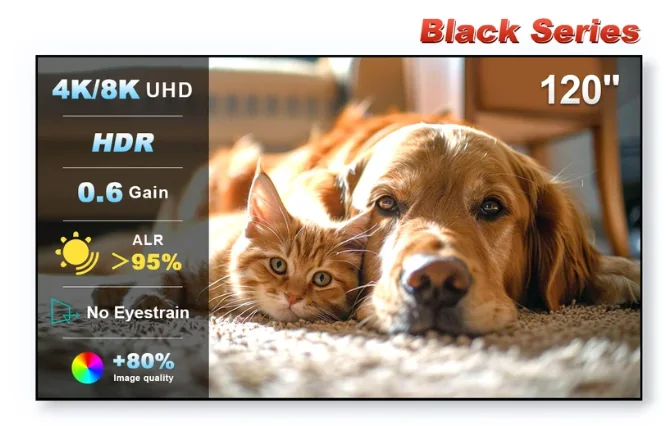
NothingProjector Black Series 120-inch ALR/CLR
Check current regional pricing, stock and merchant terms on the live offer page.
Check current price & availability →The trade-off
ALR is not free brightness. A 0.6-gain screen reflects less peak light than a 1.0 reference surface, but it can still look more contrasty in a real room because it rejects a larger share of the unwanted light. That is why gain cannot be evaluated by itself.
A sensible upgrade path
Set up the projector on the wall first, confirm that 120 inches fits, then decide whether room light is the problem you want to solve. If it is, a UST-specific ALR/CLR screen becomes a much more targeted upgrade than simply buying a brighter white surface.